A Yorkshire childhood: When I was a boy of 10, I lived for a while with my granny in a house with no heating save one small intermittent coal fire and no inside toilet. Wearing the regulation school uniform shorts, I walked to school a mile or so away winter or summer. This was just 50 years ago. I survived what would now be regarded as an ordeal without any particular recollection of severe hardship. My granny would give me a porcelain hot water bottle on nights when the icy frost flowers formed inside the windows of my bedroom. I recall crunching through fresh snow in the outside back passageway en route for the toilet, known to me to this day as 'the bog'. (No prissy 'loos' in my house!) At school, it was quite normal for us boys to be out playing compulsory football or rugby, clad in thin cotton shirt and shorts, in rain, sleet and snow. Being bitterly cold was, I suppose, supposed to encourage you to run around if only to generate heat. I have an enduring hatred of organised sports to this day!
Monday's washing day: My granny had no washing machine. All washing was by hand in the kitchen sink, aided by a wooden-handled copper plunger. She then put the washing through the  hand mangle which I helped crank. Then it went on the clothes line outside and she hoped it wouldn't rain. The damp laundry she would later festoon on a clothes horse around the small fire, usually lit in the late afternoon. In the evening, she and my grandfather would barricade themselves in the room, drawing draught-proof curtains across doors and windows and watch the TV. And what a TV! A massive wooden box with a tiny rounded black and white screen. There was only one channel: the BBC. And there were numerous 'technical faults', both with the transmission and on the set itelf which frequently went into uncontrollable rolling picture spins. But to me, it was luxury... until I was told to go to bed.
Life 100 years ago: But what about a century or more ago? My grandfather, who lived to be 101, as a boy travelled about in horse-drawn omnibuses and carts, on a bicycle but mostly on foot. There were, of course, no cars and the Wright brothers hadn't yet invented powered flight. Most houses had no running water or toilets. My granny's small 1930s semi-detached house, which I remember from the late 1950s, would have seemed luxurious to people at the turn of the 19th century. And their accommodation and means of transport would have seemed likewise to people living a century earlier... and so on back to the simple huts, yurts, tepees and caves of our more distant ancestors, not forgetting that there are still plenty of people around the world who still live in that simple fashion.
Jump to 2008: Oh my, how things have changed! Today, people expect to live in permanently warm houses as a sort of obvious right. And most expect a home with 2 or more toilets, shower rooms, bathrooms and constant hot water. Then there's the phone, a basic necessity now - if only for broadband access - but my granny didn't have one. Making a phone call from the phone box round the corner was a rare and expensive event. So we wrote letters then; a dead art today. Most rich world homes today have several TVs, often with giant screens and, via satellite (yes, I remember Sputnik 1, the first Earth satellite, back in 1957), hundreds of channels to choose from. Everyone now has some means of recording TV so you could spend your whole life watching something.
And my point is? This whole flimsy house of cards depends utterly on cheap fossil fuel (see my earlier post). These Great Expectations can't go on. Obviously if you're born to all this 'stuff' -- be it cars, supermarket food, warm homes, automatic washers, DVDs, iPods, Facebook and numerous etceteras -- you're not really able to appreciate the comfort and luxury all this affords because you've never known life without. Most would say these things were basic necessities; a right; essentials.
 hand mangle which I helped crank. Then it went on the clothes line outside and she hoped it wouldn't rain. The damp laundry she would later festoon on a clothes horse around the small fire, usually lit in the late afternoon. In the evening, she and my grandfather would barricade themselves in the room, drawing draught-proof curtains across doors and windows and watch the TV. And what a TV! A massive wooden box with a tiny rounded black and white screen. There was only one channel: the BBC. And there were numerous 'technical faults', both with the transmission and on the set itelf which frequently went into uncontrollable rolling picture spins. But to me, it was luxury... until I was told to go to bed.
Life 100 years ago: But what about a century or more ago? My grandfather, who lived to be 101, as a boy travelled about in horse-drawn omnibuses and carts, on a bicycle but mostly on foot. There were, of course, no cars and the Wright brothers hadn't yet invented powered flight. Most houses had no running water or toilets. My granny's small 1930s semi-detached house, which I remember from the late 1950s, would have seemed luxurious to people at the turn of the 19th century. And their accommodation and means of transport would have seemed likewise to people living a century earlier... and so on back to the simple huts, yurts, tepees and caves of our more distant ancestors, not forgetting that there are still plenty of people around the world who still live in that simple fashion.
Jump to 2008: Oh my, how things have changed! Today, people expect to live in permanently warm houses as a sort of obvious right. And most expect a home with 2 or more toilets,
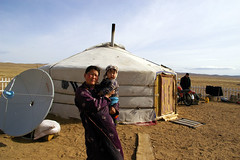 shower rooms, bathrooms and constant hot water. Then there's the phone, a basic necessity now - if only for broadband access - but my granny didn't have one. Making a phone call from the phone box round the corner was a rare and expensive event. So we wrote letters then; a dead art today. Most rich world homes today have several TVs, often with giant screens and, via satellite (yes, I remember Sputnik 1, the first Earth satellite, back in 1957), hundreds of channels to choose from. Everyone now has some means of recording TV so you could spend your whole life watching something.
And my point is? This whole flimsy house of cards depends utterly on cheap fossil fuel (see my earlier post). These Great Expectations can't go on. Obviously if you're born to all this 'stuff' -- be it cars, supermarket food, warm homes, automatic washers, DVDs, iPods, Facebook and numerous etceteras -- you're not really able to appreciate the comfort and luxury all this affords because you've never known life without. Most would say these things were basic necessities; a right; essentials.
Communicating: A mobile phone is indispensible if you're a teen or young adult. I have one  myself. Yet a short fifty years ago, a fixed phone in a house was a luxury and not people many had them. Life went on. Today, people are in touch with friends all the time. Step back 30 years. I was working in the high Peruvian Andes for weeks at a time. I could only send a brief telegram to my wife in Lima if I happened to pass through some small town. Most of the time, she didn't know if I was alive or dead and the odd telegram she did receive a day or so after sending was often hopelessly garbled. Now jump back to the time of World War 2. I once met a former soldier who had been unable to contact his wife for over 3 years and, I gather, that wasn't unusual. Suddenly, sending a telegram every week or so seemed like regular chat!
A scary dependency: So imagine the chaos if some of these 'essentials' that every younger person takes for granted today ceased to work or be available! There'd be riots in the streets; anarchy. Doomsayers like James Lovelock predict that civil consumerist societies will disintegrate when planetary heating really kicks in. How many people know basic skills like cooking or how to grow their own food? Is life possible without the Internet and mobile phones? Without cars and the fuel they need to move? Without holidays abroad? Without supermarkets and shopping?
 myself. Yet a short fifty years ago, a fixed phone in a house was a luxury and not people many had them. Life went on. Today, people are in touch with friends all the time. Step back 30 years. I was working in the high Peruvian Andes for weeks at a time. I could only send a brief telegram to my wife in Lima if I happened to pass through some small town. Most of the time, she didn't know if I was alive or dead and the odd telegram she did receive a day or so after sending was often hopelessly garbled. Now jump back to the time of World War 2. I once met a former soldier who had been unable to contact his wife for over 3 years and, I gather, that wasn't unusual. Suddenly, sending a telegram every week or so seemed like regular chat!
A scary dependency: So imagine the chaos if some of these 'essentials' that every younger person takes for granted today ceased to work or be available! There'd be riots in the streets; anarchy. Doomsayers like James Lovelock predict that civil consumerist societies will disintegrate when planetary heating really kicks in. How many people know basic skills like cooking or how to grow their own food? Is life possible without the Internet and mobile phones? Without cars and the fuel they need to move? Without holidays abroad? Without supermarkets and shopping?
Can poverty teach us something? It could in the sense that the poorest people have to learn to be survivors or they die. They have to be able to make do for food, clothing, shelter and medicine or they die. The poorest peoples have no Western-style safety net to keep them alive. But in the event of the collapse of civilisation, it will be those who know how to make do with next to nothing who will be amongst the survivors. They will have the key skills. Keyboard skills will count for nought.


 Posts