Thursday, February 21, 2008

Great Expectations: Perspectives on Memories

Redcar sea front, nice enough on a warm summer day but freezing in the winter. By MattSearle A Yorkshire childhood: When I was a boy of 10, I lived for a while with my granny in a house with no heating save one small intermittent coal fire and no inside toilet. Wearing the regulation school uniform shorts, I walked to school a mile or so away winter or summer. This was just 50 years ago. I survived what would now be regarded as an ordeal without any particular recollection of severe hardship. My granny would give me a porcelain hot water bottle on nights when the icy frost flowers formed inside the windows of my bedroom. I recall crunching through fresh snow in the outside back passageway en route for the toilet, known to me to this day as 'the bog'. (No prissy 'loos' in my house!) At school, it was quite normal for us boys to be out playing compulsory football or rugby, clad in thin cotton shirt and shorts, in rain, sleet and snow. Being bitterly cold was, I suppose, supposed to encourage you to run around if only to generate heat. I have an enduring hatred of organised sports to this day!

Monday's washing day: My granny had no washing machine. All washing was by hand in the kitchen sink, aided by a wooden-handled copper plunger. She then put the washing through the The TV was much less fancy than this one! By gunnyrathand mangle which I helped crank. Then it went on the clothes line outside and she hoped it wouldn't rain. The damp laundry she would later festoon on a clothes horse around the small fire, usually lit in the late afternoon. In the evening, she and my grandfather would barricade themselves in the room, drawing draught-proof curtains across doors and windows and watch the TV. And what a TV! A massive wooden box with a tiny rounded black and white screen. There was only one channel: the BBC. And there were numerous 'technical faults', both with the transmission and on the set itelf which frequently went into uncontrollable rolling picture spins. But to me, it was luxury... until I was told to go to bed.

Life 100 years ago: But what about a century or more ago? My grandfather, who lived to be 101, as a boy travelled about in horse-drawn omnibuses and carts, on a bicycle but mostly on foot. There were, of course, no cars and the Wright brothers hadn't yet invented powered flight. Most houses had no running water or toilets. My granny's small 1930s semi-detached house, which I remember from the late 1950s, would have seemed luxurious to people at the turn of the 19th century. And their accommodation and means of transport would have seemed likewise to people living a century earlier... and so on back to the simple huts, yurts, tepees and caves of our more distant ancestors, not forgetting that there are still plenty of people around the world who still live in that simple fashion.

Jump to 2008: Oh my, how things have changed! Today, people expect to live in permanently warm houses as a sort of obvious right. And most expect a home with 2 or more toilets,Yurt and satellite TV dish. By Fighting Tiger shower rooms, bathrooms and constant hot water. Then there's the phone, a basic necessity now - if only for broadband access - but my granny didn't have one. Making a phone call from the phone box round the corner was a rare and expensive event. So we wrote letters then; a dead art today. Most rich world homes today have several TVs, often with giant screens and, via satellite (yes, I remember Sputnik 1, the first Earth satellite, back in 1957), hundreds of channels to choose from. Everyone now has some means of recording TV so you could spend your whole life watching something.

And my point is? This whole flimsy house of cards depends utterly on cheap fossil fuel (see my earlier post). These Great Expectations can't go on. Obviously if you're born to all this 'stuff' -- be it cars, supermarket food, warm homes, automatic washers, DVDs, iPods, Facebook and numerous etceteras -- you're not really able to appreciate the comfort and luxury all this affords because you've never known life without. Most would say these things were basic necessities; a right; essentials.

Communicating: A mobile phone is indispensible if you're a teen or young adult. I have one Old bakelite rotary dial phone. By storm_galmyself. Yet a short fifty years ago, a fixed phone in a house was a luxury and not people many had them. Life went on. Today, people are in touch with friends all the time. Step back 30 years. I was working in the high Peruvian Andes for weeks at a time. I could only send a brief telegram to my wife in Lima if I happened to pass through some small town. Most of the time, she didn't know if I was alive or dead and the odd telegram she did receive a day or so after sending was often hopelessly garbled. Now jump back to the time of World War 2. I once met a former soldier who had been unable to contact his wife for over 3 years and, I gather, that wasn't unusual. Suddenly, sending a telegram every week or so seemed like regular chat!

A scary dependency: So imagine the chaos if some of these 'essentials' that every younger person takes for granted today ceased to work or be available! There'd be riots in the streets; anarchy. Doomsayers like James Lovelock predict that civil consumerist societies will disintegrate when planetary heating really kicks in. How many people know basic skills like cooking or how to grow their own food? Is life possible without the Internet and mobile phones? Without cars and the fuel they need to move? Without holidays abroad? Without supermarkets and shopping?

Can poverty teach us something? It could in the sense that the poorest people have to learn to be survivors or they die. They have to be able to make do for food, clothing, shelter and medicine or they die. The poorest peoples have no Western-style safety net to keep them alive. But in the event of the collapse of civilisation, it will be those who know how to make do with next to nothing who will be amongst the survivors. They will have the key skills. Keyboard skills will count for nought.

Wednesday, February 20, 2008

What's wrong with this picture?


Here's a clue. I took it on 11th February (last week).
Here's another clue: It's the middle of winter.
And another: This mountain - Yr Wyddfa or Snowdon - is the highest in England and Wales.
But where's its winter snow covering? Predictions made a year ago suggested no snow for Snowdon in 13 years. There has been a little snow from time to time this winter but not, as I write, for weeks. Need I say more?
If you click the picture, you get a large version.

Wednesday, January 09, 2008

Energising renewable energy

Proven turbine chugging quietly away at the back of the community co-op shop, island of Eriskay, ScotlandGoing slow: Why is renewable energy becoming energised so slowly in 'backward' countries like the Great Britain which is where I live? Why has it taken off in Germany? Both countries have similar climates: lots of grey skies and wind. In fact, Britain has more wind and a vast resource, as yet untouched, of wave and tide power which Germany with its limited coastline does not possess. And yet Germany is streets ahead on producing energy from renewables, principally photovoltaics. Renewable energy made up more than 14 percent of Germany's power consumption in 2007, up from almost 12 percent in 2006, with wind as the main contributor (source: The Guardian). Why Germany?


Becoming energised: It seems it's all down the German government's intelligent foresight. The government guarantees a market for solar power by operating a system of feed-in tariffs. There, as explained in a New Scientist article (Solar power: The future's bright, 8 December 2007), anyone who produces electricity from solar power can sell it to the national grid for between Euros 0.45 and Euros 0.57 per kilowatt-hour, which is almost three times what consumers pay for their electricity, roughly Euros 0.19 per kilowatt-hour.


And the result? Today there are over 300,000 photovoltaic (PV) systems in Germany, mostly on the rooftops of homes and small businesses, and Germany is the world's fastest-growing PV market. It has 55 per cent of the world's installed base of PV panels and can generate around 3 gigawatts of electricity from solar energy, equivalent to between three and five conventional power stations (ibid, New Scientist). All from a country which passes much of its time under grey cloud like Britain.


The windiest European country lags badly: Great Britain could have done this for wind energy -- PV too since the amounts of solar energy received by Britain and Germany are fairly similar. It could have done it for waves and tide power but instead, it relied of cheap oil and gas from the North Sea, coal and the massively-subsidised nuclear industry.


It needn't be like this: A smart British government would follow Germany's lead -- now actively being pursued by Italy and Spain for PV -- and California is, as usual, leading the way in the USA with major subsidies for new PV installations. Britain is well placed to energise its wind power generation together with developing emerging technologies for storing the energy produced by using compressed air energy storage (CAES), perhaps utilising the vast underground caverns left by salt-mining in central-west parts of England. At present, the British government offers a derisory grant and rumour has it that even this is to be axed. So there is little incentive for someone like me to invest in a wind turbine on my windy north-west Wales farm.


NIMBY and turbulence: Quite apart from the requirement for planning consent for stand-alone turbines, there is the problem of those people who object to 'spoilt views' (it seems the numerous power pylons are okay bringing energy from a far-off polluting coal power station which is not, of course, in their back yard!) and who complain of 'possible noise' (aircraft? helicopter? cars? lorries? All okay, it seems). That is quite sufficient for a local council to reject an application for a turbine.


Turbulence is another issue and can be a serious problem around buildings and in urban areas -- which makes the new 'bolt on your wall'-type turbines a bad buy. But what about farms? Fields are open; turbines are free-standing: it's not difficult to find space on any farm of my size (5 hectares) or bigger. Farms are already host to eyesores like huge barns, stacks of silage, slurry tanks and grain silos, all acceptable to the planners. The view is already compromised.


Decentralised power stations: So imagine if every farm had a turbine or two? There are several first class turbines (like the range offered by Proven, as featured in my picture) which are tailor-made for farm use. In fact, Proven are attempting to start a new way of producing wind energy called wind crofting. There are tens of thousands of farms in windy Britain. Every farm, linked into the grid, could be electric energy-independent as well as feeding surplus power into the national grid. The wind is almost always blowing somewhere. (As I write, it's blowing a severe gale here!)


Could be? Should be and would be if there was a scheme for feed-in tariffs like Germany's. I'd be one of the first to join! Come on, British government: get your act together and stop approving coal-fired power stations on the flimsiest of pretexts (Carbon Capture and Storage -- CCS -- might perhaps someday become a reality) and tap into this massive resource of power available now, pollution-free with no decommissioning costs...

If the practical side of renewable energy interests you, keep an (RSS feed) eye on my Mur Crusto eco-farm blog because my wife and I are agreed that, notwithstanding all the difficulties and lack of assistance available, we shall try and install a 6kW Proven turbine this year. As the project proceeds, I'll be posting...

Saturday, October 27, 2007

Double good: building without cement

Cement factory in Derbyshire, UK, by Roger B.Cement is a problem
Did you know that cement manufacture creates 5% of all industrial carbon dioxide emissions? That matches the pollution output of the world's aviation industry. What's more, both are set to increase, particularly in China. Construction inevitably means cement for mortar and concrete -- or does it? Certainly for the likes of high-rise city blocks, nuclear power stations and large dams, there's no alternative. But what about ordinary housing? How much concrete needs to be used in that?

Wood: a partial solution with a big bonus
A large building in Texas, all made out of timber. By Fatty Tuna (flickr)
Building houses out of wood is nothing new in timber-rich regions like Scandinavia and North America. Wood has many advantages over bricks, mortar, steel and concrete. For one thing, it's very easy to use so buildings can be completed in just weeks rather than months. When I 'built' my first house in western Canada back in 1971, it took 3 weeks to get the entire structure completed and watertight, ready for services to be installed. When I built my house in Spain in 1989, it took more like 6 months. Why? Because there was no wood used in my Spanish house at all, that being the local style of building. Prestressed concrete beams, which are used in large numbers, are incredibly heavy to manhandle into position or cast. So are blocks, bags of cement and making and carrying endless buckets of mortar. I worked on this house throughout the construction, so I know!

The hidden bonus of wood is that it is almost pure carbon. The growing tree grabs CO2 out of the air and converts it into sugars and, ultimately, to cellulose and lignin which is what we call wood. Everyone knows that trees sequester carbon and that they are one of several natural ecosystem services -- in this case, carbon sinks -- which counter climate change caused by humans burning fossil fuels. This is the rationale behing the burgeoning offsetting business. Plant a few trees and you can pollute as much as you want. That's what people seem to assume when guilt over squandering energy overcomes them a little.


The big issue: seeing the wood for the trees
Even if it were true that you can assuage your travel/consumer/heating/airconditioning energy use by offsets, there is one problem which seems not to enter general thinking. Natural forests are carbon neutral. As fast as young growing trees grab carbon, dead and decaying trees (and forest fires) release it again: the carbon cycle. To make sequestering carbon in trees really work to reduce atmospheric CO2, the mature trees need to be harvested and stored in such a way that they don't decompose and release all their carbon again. Carbon storage is what happened on a massive scale over hundreds of millions of years, as coal formed from dead but not decayed trees. The carbon has become safely locked away from oxidation into the atmosphere... until humans came along (and you know the rest). Yet when you think about it, we are storing carbon all the time -- in the form of timber-framed housing construction and, to a lesser extent, as books in the world's libraries.

So that's my point: countries which traditionally use cement in the form of concrete and mortar to build houses should change their construction practice and build from timber instead. This change of direction has several advantages:

  • timber construction locks away carbon
  • it's quicker and easier
  • self-build is much easier and in some countries, you can buy housing kits to do this
  • it is essentially non-polluting unlike cement-based constructions which cause massive CO2 releases into the air, principally from cement quarrying and manufacture
  • if real environmental costs are taken into account, wood is far cheaper
  • greater demand for timber would stimulate more forestry development with yet more sequestration of carbon as a bonus. At the same time, cement manufacture would decline as demand slackened off, so reducing carbon pollution
  • timber can be re-used
  • timber-framed buildings are intrinsically warmer than stone, brick, block and concrete. In addition, it is simple to incorporate insulation in the timber frame
  • wood is a pleasant material to work with and beautiful to look at. Concrete is messy and heavy to move around

Yes I know concrete is essential for many purposes, including the foundations (footings) of timber-framed housing. My point is simply that we could use a lot less of it -- a lot less -- if we wanted to.

Tuesday, October 09, 2007

The Future of Nuclear Power

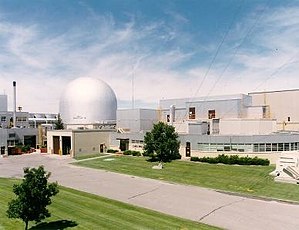
Sizewell nuclear power station: a large footprint (and what about rising sea-levels?) by Rob.Stoke
Today is the final day for anyone to make their views known about future nuclear power in the UK. I've done this on the British Government's Future of Nuclear Power website. Just to put you in the picture, I have argued for some time that, if we are to have new nuclear power stations, they should be built underground.


Here are my responses to the Government's consultation questions:


1. Safety and security of nuclear power


Siting all future nuclear plants underground is something that should be taken very seriously. This does not even seem to have been considered. Yet it has three major advantages:


  1. immune to military attack from the air

  2. containment unbreachable (given proper choice of ground conditions, hydrogeology and rock types) and so immune to attack from, say, a suicide bomber. Even major LOCAs would be better contained than anything above ground

  3. no need ever to remove irradiated fuel assemblies. When the reactor reaches the end of its operating lifetime, the whole facility could be sealed, complete with its spent fuel. Monitoring would be needed but because nothing is above ground, access would only be minimal. Decommissioning surface plants is turning out to be formidably expensive and all radioactive materials end up having to be sealed underground anyway in all viable scenarios


2. Transport of nuclear materials: No reprocessing is the right route, but by siting each nuclear plant underground, there would be no need for the spent fuel ever to leave the facility. It would be stored there in a facility built at the same time as the reactor containment cavern. When the reactor's life is over, both it and the spent fuel stored close by would be made safe, sealed and remotely monitored. No radioactive materials, highly active or otherwise, need ever be transported on the surface.


3. Waste and decommissioning: Locating new reactors underground would avoid many of the serious problems of waste and dceommissioning. At the end of the reactor's life, all its fuel remains in the store which would have been constructed during the initial cavern excavations and the whole underground site becomes a remotely-monitored facility with little further need for maintenance. Such an arrangement is inherently safer than a surface reactor which will need to be guarded and monitored through at least three human generations before it can be finally removed: not a good legacy for future generations.


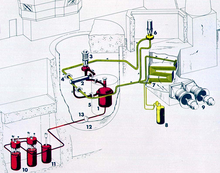
4. Environmental impacts of nuclear power: If the nuclear facility was largely located underground, the surface footprint of a site would be markedly less than at present, quite apart from the safety aspect which I've already dealt with. There would be no need for a secondary containment structure since this would be provided by suitably geo-engineered natural rock in the excavated cavern. Surface buildings could all be part of the non-radioactive secondary circuits. So the heat exchangers containing the pipework for the primary circulating coolant would be underground but the high pressure steam circuit for the turbo-generators could be ducted to the surface which is where generators, transformers, cooling and other facilities would be located.


Regarding the space occupied by a nuclear facility versus that occupied by a windfarm, I have two comments:


  1. most future windfarms should anyway be located offshore, so space and NIMBYism is largely irrelevant

  2. any space occupied by a windfarm remains relatively pristine. If needed, turbines and supports can be completely removed within months, leaving the site uncontaminated and as it was before. The same cannot be said of surface nuclear build because of the massive largely concrete bioshielding infrastructure required and the problem of the 'hot' reactor core which cannot be removed for over 100 years, or requires prohibitively expensive and hazardous remote-controlled decommissioning and transport of large quantities of medium level radioactive waste to a repository as yet not in existence. These 'inconvenient truths' are a prime reason why nuclear build should in future be underground.


5. Reprocessing of spent fuel: I agree that reprocessing should not be carried out. Storage for spent fuel assemblies should be 'built in' in the underground location scenario I envisage. This eliminates the need for surface transport of highly active fuel rods.

Obviously these remarks apply to any new nuclear build anywhere on the planet, not just the UK! At the very least, I think the onus should be on governments and the energy industry to explain why siting nuclear plants underground is NOT a good idea (if it isn't!). But I expect it will be ignored... ho hum!

Sunday, October 07, 2007

The Way the Wind Blows

How it all works, from Treehugger


How could we store surplus wind power? There is a solution right under our feet.

No wind: As I was travelling on the train along the North Wales coast last Friday, I had a fine view out to the North Hoyle Offshore Wind Farm. It's a great sight all these turbines, each rated at 2 megawatts, like rows of white statues far out in Liverpool Bay. But there was a problem: it was a fine sunny day and no wind at all. The sea was like a millpond and the turbines were indeed like statues for they were motionless. Electrical output zero.

Achilles Heel: And that is wind power's big problem. It only works when the wind blows so if we relied upon wind power, on fine calm days, there'd be no power at all. This is unacceptable, of course, in our modern, energy-hungry world. But now, there's a solution and its name is CAES: compressed air energy storage. Put simply, when the wind blows during the night, wind turbines generate power which is not needed since most people are asleep. If you use that power to pump air at high pressure deep into the ground, that high pressure air can be stored and later released when power is needed, driving modified gas turbines and generators.

It works too! If you think this is unlikely to work, it already does, and much more is underway. The first CAES plant came on stream in 1978 in Huntorf, Germany and a second much larger one was commissioned in 1991 in Alabama, USA. It stores its compressed air in a mined-out salt dome 80 metres across and 300 metres tall, lying 450 metres below ground, and can use the air to supply a turbine generating 110 megawatts of electrical power continuously for some 26 hours.

Giant battery: So just like hydroelectric pumped storage, wind powered compressed air storage could act like a giant battery, evening out fluctuations in demand by topping up the grid when needed. There are plenty of geologically-suitable locations all over the world so maybe we should push politicians and utilities to get moving on CAES. To find out more, read this New Scientist article and this Treehugger piece.

Saturday, September 22, 2007

The problem with infrastructure

SUV and threatening sky, By ShuckOkay, you've decided that your SUV is a bad thing. You want to reduce your carbon footprint and buy a small car instead. Great... or is it?


Problem is, what do you do with the unwanted SUV? You sell it, of course, and thereby in some cases (like buying a new car to replace it) actually make matters worse. Now there are two cars being used instead of one. The SUV that you used to own is now owned by someone else. It's just as climate-unfriendly as it was when you owned it and it will continue to pump out pollution for years to come. See what I mean?


Solutions? The ideal would be for you to forego the money from the SUV's sale and have it broken up with all its component parts recycled into something more useful. Get real, you might say, that's never going to happen. But it could happen if some special fund were to exist whereby you could get back the full second-hand value whilst the vehicle was permanently taken off-road (!) and recycled. This, done properly, could yield quite a deal of valuable materials as well.


Who would provide this fund and new infrastructure? Any ideas? I suppose some sort of consortium between governments and industry backed up by smart tax structures would do the job. And the principle could extend to other carbon-hungry infrastructure: giant motorhomes, Hummers, aircraft... anything that could be sold on and otherwise continue to pollute for years to come. How can we make it (or something like it) happen?